ASH Premier Educational and Scientific Meetings
ASH offers premier educational and scientific meetings and workshops for hematology professionals worldwide. Browse the ASH events below to find your next hematology meeting.
ASH Annual Meeting

The Premier Event in Classical and Malignant Hematology
Save the date for the 68th ASH Annual Meeting and Exposition, taking place December 12–15, 2026, in New Orleans, Louisiana, and online!
Highlights of ASH
By attending Highlights of ASH, you will get a comprehensive review of significant scientific updates in clinical and translational hematologic research, learn how these updates directly affect the study and practice of hematology, and discover how new research can be translated into cutting-edge patient care.

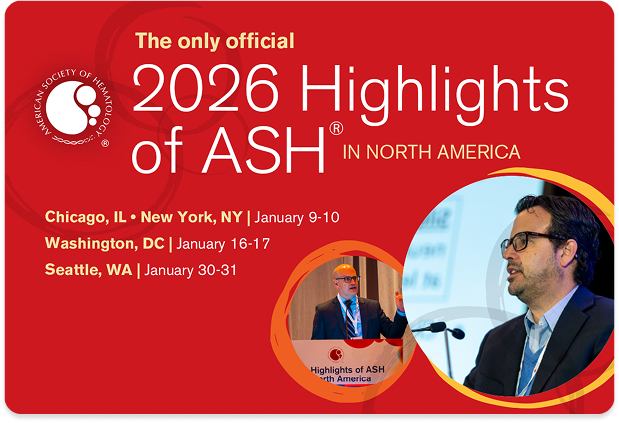
Highlights of ASH in North America
Connect with top hematology experts in person and learn how to apply the latest research to your area of expertise. Choose from several dates and meeting locations to best meet your schedule. Attendees are eligible for continuing medical education (CME) credits for physicians. The program schedule is identical for all 2026 Highlights of ASH North America locations.
.jpg?la=en&h=415&w=620&hash=46F578C455BD16C06A24C858CF143F3E)
Highlights of ASH in the Mediterranean, Middle East, and North Africa
Ask top hematology experts questions about local standards of care and how emerging technology can enhance your practice, all while hearing the most impactful research and scientific advancements presented at the latest ASH annual meeting—the leading gathering in malignant and classical hematology.
.jpg?la=en&h=423&w=619&hash=D222436304C5B913AB9C4BF7C1D12464)
Highlights of ASH in Highlights of ASH in Asia-Pacific
Connect with colleagues of all career stages and learn how emerging technology can be applied to your own work. Spend two days hearing about the most impactful scientific advancements in both clinical and translational research, including key findings from the latest ASH annual meeting—the leading gathering for both malignant and classical hematology.
